A patient who already has your practice’s name will often ask an AI assistant about you before they call. They want to know whether your physicians are experienced with what they have, whether you see people like them, and who else they should consider.
That behavior is no longer niche. About a third of U.S. adults (32%) used AI tools for health information or advice in the past year, and 41% of those users said a major reason was to look things up before deciding whether to see a provider, according to the KFF Tracking Poll on Health Information and Trust.
We are constantly asked, how does our website help us inside someone’s AI chat? The patient isn’t evaluating the AI. They’re evaluating whoever the AI cites, and the AI builds that answer from your condition, service and provider pages, one page at a time. Experience, Expertise, Authoritativeness, and Trustworthiness (E-E-A-T) is not an About page problem. Board certification proves a physician is qualified, not that they are different. The practice that puts its clinicians’ credentials and real experience on every condition and service page, in the words patients actually search, is the one patients and AI are more likely to choose.
Why the About page can’t carry it anymore
Google’s own guidance on creating helpful, reliable, people-first content says E-E-A-T is easier to understand when it’s clear who created the content. Most practices answer “who” once, on the About page or the physician bio, and leave the condition pages anonymous. An AI assistant reading your page on a specific condition may never connect it back to the bio.
When our team talks to practices about this, the pushback is usually the same: our doctors are board certified, and it’s on the site. We list THEIR credentials, maybe the locations THEIR associated with and maybe THEIR personal facts. That’s true, and it’s not enough. If all you list is board certification and the credentials and background of the doctor, you’re breaking the basic rule of marketing. You are not your consumer.
Certification is required. It ensures a physician is qualified to practice. But stopping there positions you as the same as every other physician with that certification, and in most specialties, that’s every physician you compete with. When Tidal Health Group runs a Transparency & Certifications Review, the list of certification and accreditations, is where the work starts, not where it ends. The differentiator is what comes next: understanding your patient and speaking in their language. That’s what separates you from every other similarly credentialed provider, and it’s what makes specialization visible.
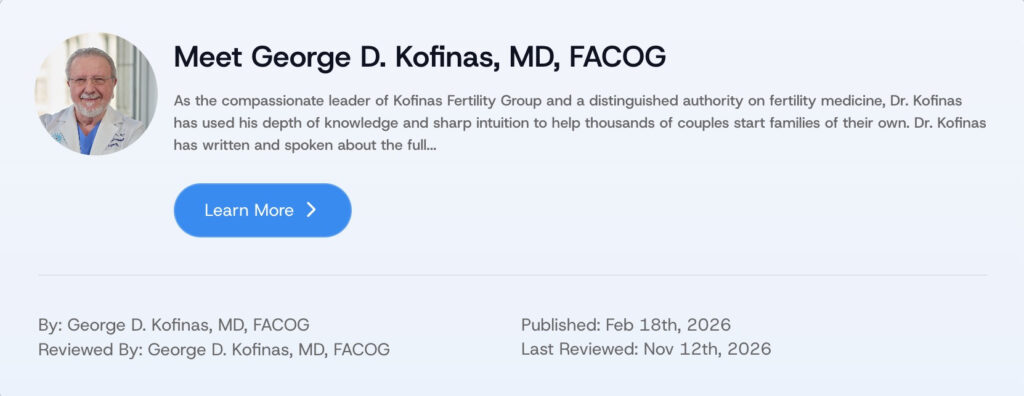
In practice, that means every condition and service page names the clinician who wrote or reviewed it, links to their bio, states their board certification and training, and shows when the page was last reviewed. A review date tells the patient, and anything reading on the patient’s behalf, that someone with the right credentials is keeping the page current. It takes a few lines per page, and most practices still leave all of it on the About page.
When volume tells the wrong story
One fertility practice we work with is diagnosis-first. Its physicians look for the cause before recommending another treatment cycle, and the practice is out of network. On pure volume, it looks smaller than the busier cycle-driven groups around it, for the wrong reasons.
If an AI assistant compares practices on numbers alone, that practice can lose a comparison it should win. The answer isn’t more data. It’s narrative, written on the page: the approach, in the clinicians’ names, on the conditions they treat.
This is what our agency means by “Translate Offline Authority Online”, a method to convert real-world reputation (research, publications, outcomes) into digital signals. For this practice, reputation is a way of practicing medicine. It only counts in AI answers if it’s written down where the AI is reading.
Use the patient’s word, then prove it
A more tactical example comes from a multi-provider cardiology practice in a major metro.
Postural orthostatic tachycardia syndrome (POTS) is a condition in which standing up may trigger a rapid rise in heart rate, along with lightheadedness and other symptoms, according to the National Institute of Neurological Disorders and Stroke. There is no board certification that makes someone a “POTS specialist”. Plenty of patients search for one anyway.
Our team worked with the practice to identify the providers with the most experience treating the syndrome and built specialist pages around them. Each page uses the patient’s word, “specialist,” and backs it with what our Scientific Credentials Signaling work evaluates: the achievements, publications and media that show a clinician’s depth, alongside their actual board certification and training. The label meets the patient’s search. The credentials make it defensible.
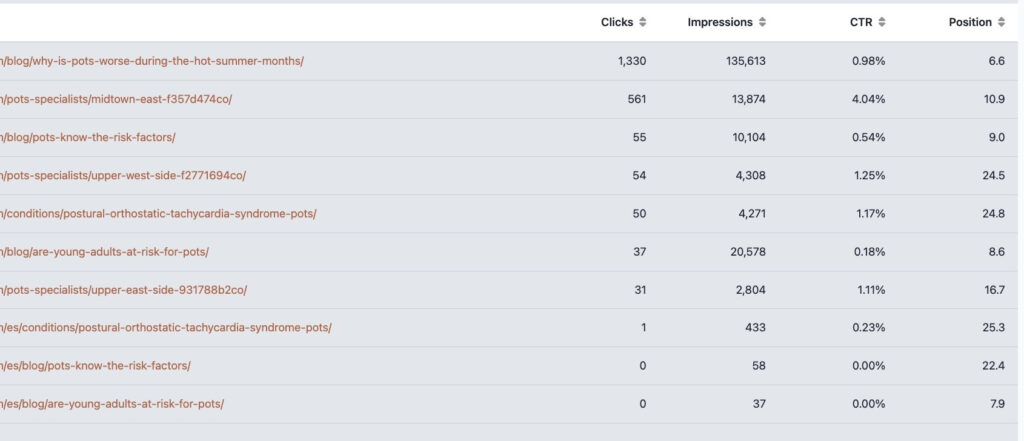
The strongest of those pages earned the highest click-through rate of any page on the topic, from a lower average position than the practice’s most-visited POTS blog post. Not every specialist page performed the same way, which is its own lesson: the label isn’t the work. The depth behind it is.
Where most practices go wrong
Search used to be three to five keywords that grouped people into big buckets. Now almost every search is an n of one, with more personal detail and more complexity in each question. From a content perspective, the answer is more language and more nuance around what you do. Most practices miss that in one of three ways.
They don’t use search data to find their language. Pages are written in clinical terms the practice uses internally, not the words patients type.
When they do, it stays on the blog. Search terms become blog topics and never make it onto the condition, service and provider pages, which are the pages AI uses to vet a practice.
They ignore their own data. Appointment types and CPT and ICD code volumes, pulled as de-identified, aggregate counts, show where a practice has real depth. The same goes for the questions patients ask most often at intake and in messages, gathered as de-identified themes by the practice’s own staff with their privacy officer’s review. HHS explains what counts as properly de-identified in its guidance on de-identifying protected health information. Used that way, your own operations become a source of experience claims and of the words to write them in.
What to do first
1. Export your Search Console data. Look for high-volume, high-value queries tied to your core specialty, conditions or services where your pages show up but rank low or rarely earn the click. Search Console only shows queries you already appear for, and it doesn’t show conversions, so pair it with GA4 to see which of those pages turn visits into appointment requests. The POTS specialist query was exactly that kind of gap before the practice built for it.
2. Translate with your clinical team. Expect some back and forth. Sit down with your clinicians and match the everyday phrases they hear from patients to the clinical terms they already use. Then confirm which providers have the experience to stand behind each one, and write that experience onto the page in their name. This is the core of how THG approaches content marketing for healthcare practices.
Start with what AI already sees
If you want to know how your pages read to a patient vetting you through an AI assistant, THG’s AuthorityInsite audit looks at your credentials, reputation and digital profile together and gives you a corrective roadmap.
Your physicians earned their certifications. The next step is making sure every page says what makes them different, in the words your patients use. Talk to THG about content marketing that does that.