Ready for A Healthcare Website that Books. More Patients, and Stays Compliant?

Design, build, and maintain a fast, accessible site that converts, protects PHI, and plays nicely with your EMR, phones, and analytics.

Healthcare Websites Built Around the Patient’s Next Step

A healthcare website has one job: turn the right visitors into booked appointments. Watch how Tidal Health Group builds web experiences that support patient decision-making, reflect clinical credibility, and hold up under the technical standards search engines actually reward.


Trusted Partners

More Booked Visits

  • Online + phone conversion tuned for healthcare: clear CTAs, short forms, click-to-call, hours/insurance above the fold, location pages that rank.
  • EMR/scheduler integrations or custom request-an-appointment flow.
  • Fast pages that meet Core Web Vitals.

Lower legal and IT risk

  • WCAG 2.2 AA build, continuous monitoring, and human QA (no “overlay only” promises).
  • HIPAA-aware analytics and consent flows; we implement tracking the right way given the latest HHS/DOJ landscape.
  • Hardened stack: WAF, DDoS, backups, access controls.

Better organic visibility

  • Structured data for medical entities, physicians, and locations.
  • Information architecture (IA) that mirrors how patients search by symptom, condition, and service line.
  • Keep your existing security notes (Cloudflare, backups, Mailgun), but tuck them under these outcomes—don’t lead with them.

The Process

How we get you live

Diagnose & define: audit content, information architecture, tech, risk; set conversion & compliance targets.

Design & build: page templates, clinic/physician schemas, scheduler/phone flows, speed & accessibility baked in.

Launch & improve (ongoing): analytics you can trust, CRO tests on forms/phone routing, monthly vitals & accessibility checks.

Work That Speaks For Itself

Healthcare organizations hire us when the gap between their current performance and their potential is too wide to ignore. The case studies below document what happened when we closed that gap: the strategies applied, the decisions made, and the numbers that followed.
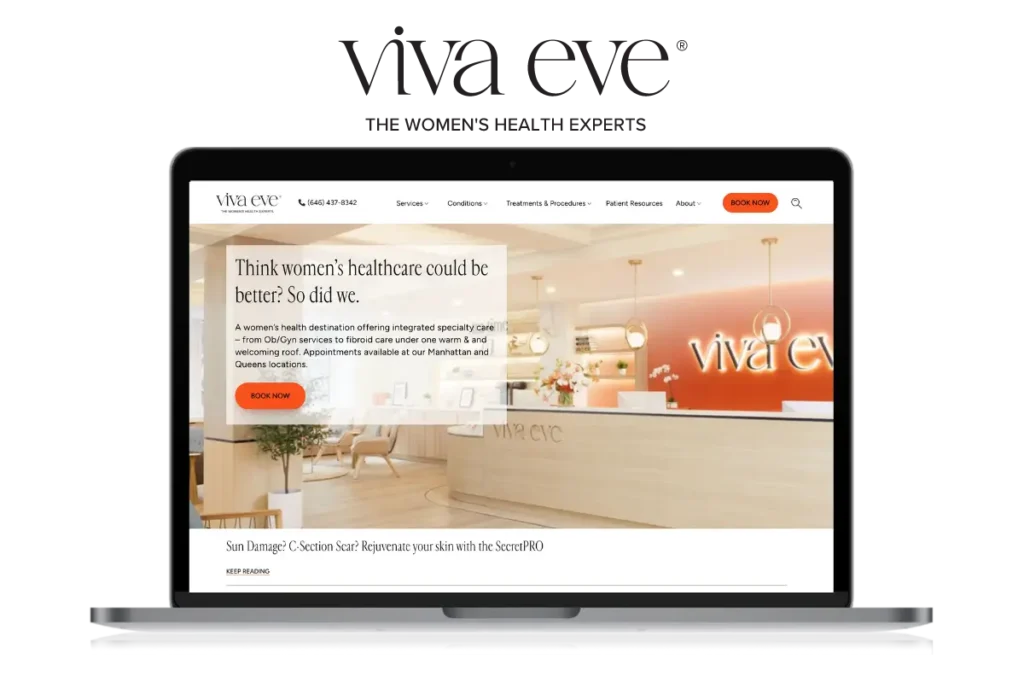
Viva Eve

How Viva Eve Turned a 'Rat's Nest' of Marketing Tech Into Clarity and Growth

Learn More

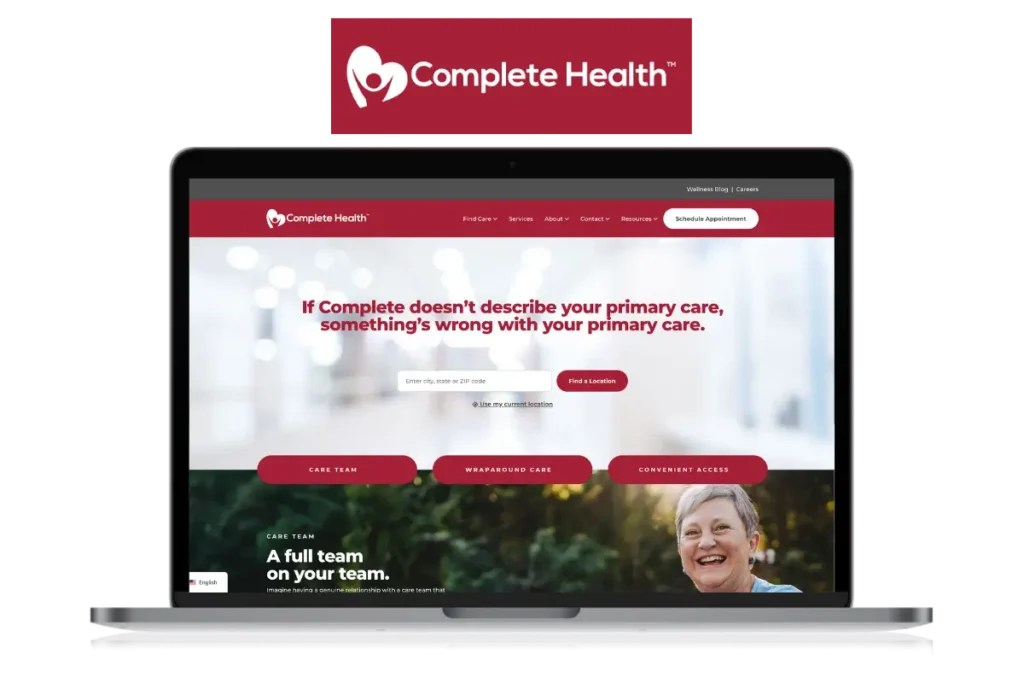
Complete Health

How Complete Health Began Building Digital Authority in a Value-Based Care Market

Learn More

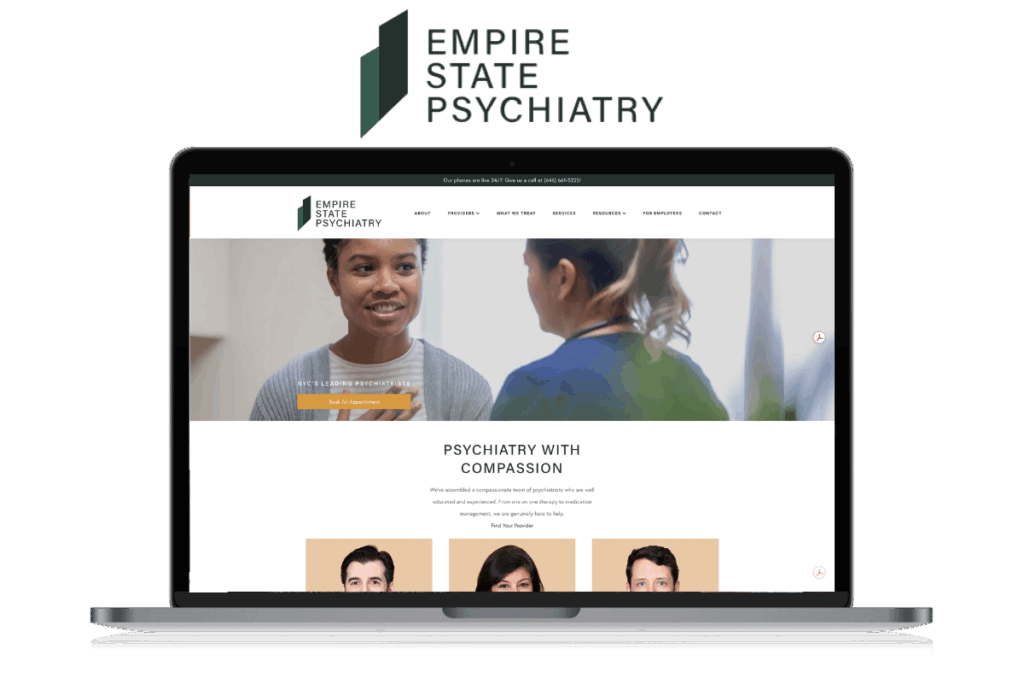
Empire State Psych

How Empire State Psych Broke Free from Zocdoc and Built an Ownable Patient Growth Engine

Learn More

Frequently Asked Questions

Several reasons that matter from day one. Compliance: HIPAA governs how patient data flows through your forms, analytics, and scheduler integrations. ADA and WCAG accessibility are legal requirements, not optional add-ons. Performance: Google’s Core Web Vitals thresholds affect both rankings and conversion rates, and healthcare sites with heavy EMR embeds and image content typically fail without intentional engineering. And SEO: a healthcare site needs structured data for physicians, locations, and conditions to have any chance of ranking against established players.

A full build from audit through launch typically runs 12 to 20 weeks depending on the size of the site, number of locations, and how much content needs to be created or migrated. Projects with clean existing content and fast internal review cycles run faster. Projects that involve multi-location architecture, complex EMR integrations, or a full content overhaul take longer. We scope this at the start based on your situation.

Sometimes, yes. If the information architecture is sound, the content is strong, and the conversion paths work, a technical and compliance layer can deliver real gains without a full redesign. More often, the design and technical problems are intertwined. Slow load times come from bloated templates. Poor rankings come from flat page structures. Conversion problems come from how calls-to-action and insurance information are presented. We tell you honestly which situation you are in during the audit phase.

Yes. We build around your scheduler, not instead of it. That means designing the booking path so that insurance, location, and provider selection are visible before a patient clicks into the scheduler, click-to-call is prominent for patients who prefer the phone, and there is a compliant fallback when the EMR’s own UX creates friction. A scheduler embed is not a conversion solution by itself. The path around it is.